3 Ways Map Tests can Help Students Learn Ancient History
Many 6th grade social studies teachers give map tests for each of their ancient civilization units.
But do they utilize these map tests to their fullest potential?
But do they utilize these map tests to their fullest potential?
In this post, discover 3 tips for getting the most out of your ancient history map tests.
Map Test Tips for Ancient History

Tip #1 - Enhance your Instruction
Every time you begin a new ancient civilization unit, chances are good that you start with the location on the globe.
This is also why students should receive their practice maps - blank and labeled - on day one of the new unit.
Referencing the maps while learning about location is the obvious connection between maps and content.
But you will also want to reference the geographical features on the map during other moments within your unit. Such as the impact geography has on the civilizations’ stable food supply. Not just what is grown, but also where and how.
The geography also has a huge impact on daily life, cultural traditions, art, and technology. In truth, there are rarely lessons where you won’t see how to connect with the geography of the region. And referencing the maps used for your map tests are ideal to help your students make connections.
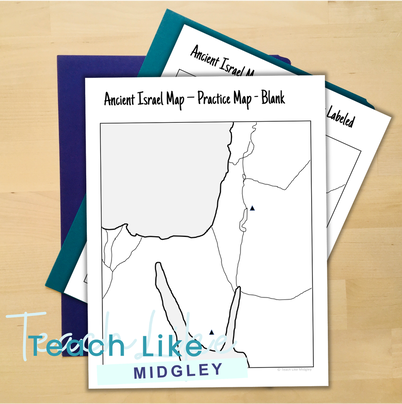
Ancient Israel Map Test Set Available in my TpT Store
Tip #2 - Utilize Extra Class Time
How often do you find yourself with an extra 5-10 minutes of class time? Maybe activities finished up earlier than expected. Or maybe you have a few early finishers on your hands. What can you do?
Having students practice for their upcoming Map Test is an excellent way to use that time.
But don’t just say, “Time to study!”
Be specific. Have your students make their own practice tests. Pair up students and have them share with each other memorization strategies they are using. You can even have students write questions about the geographic features on the map relating to the lesson you just finished.
Having students practice for their upcoming Map Test is an excellent way to use that time.
But don’t just say, “Time to study!”
Be specific. Have your students make their own practice tests. Pair up students and have them share with each other memorization strategies they are using. You can even have students write questions about the geographic features on the map relating to the lesson you just finished.
Tip #3 - Revisit Continents and Countries
When I first started teaching, I was amazed at how many students were confused by continents and countries. Which is why I started including them with ALL my Map Tests.
The first Map Test of the year - done during our Prehistory Unit - is focused on the 7 continents.
After that, every Map Test that follows includes the question - what continent is this civilization located on?
It is also helpful to include on the Map Test the borders and names of present-day countries. This helps reinforce the difference between continents and countries. But it also gives students a frame of reference for today’s world map.
During your lessons and review sessions, be sure you are asking questions about continents and present-day countries. The more students are exposed to these questions, maps, and labels, the more confident they will become.
The first Map Test of the year - done during our Prehistory Unit - is focused on the 7 continents.
After that, every Map Test that follows includes the question - what continent is this civilization located on?
It is also helpful to include on the Map Test the borders and names of present-day countries. This helps reinforce the difference between continents and countries. But it also gives students a frame of reference for today’s world map.
During your lessons and review sessions, be sure you are asking questions about continents and present-day countries. The more students are exposed to these questions, maps, and labels, the more confident they will become.
Map Test Materials for Ancient History
Sure, you can grab a map and label it with some numbers. But just make sure you incorporate the map and all of its knowledge within your lessons so students can get the most out of the learning experience.
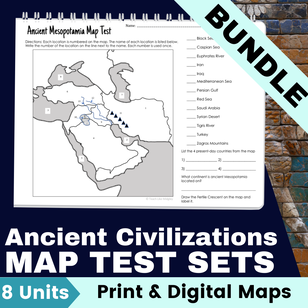
If you are looking for an easy way to start using Map Tests in your 6th grade social studies classroom, then be sure and check out my done-for-you Ancient Civilizations Map Tests.
If you are looking for an easy way to start using Map Tests in your 6th grade social studies classroom, then be sure and check out my done-for-you Ancient Civilizations Map Tests.
You May Also Like...
Let's Connect...
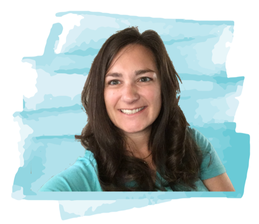
Welcome! I'm Hillary Midgley, a veteran 6th grade teacher.
I create educational materials and develop curriculum for other teachers. I specialize in teaching students how to learn through my Study Skills Curriculum. I have established fundamental classroom systems and structures for teachers to help them streamline their classroom. And my passion is teaching ancient history through engaging activities with foundations in academic skills. Here you will find resources on all of these topics and more. Learn more about me here.

|

|

|

|